
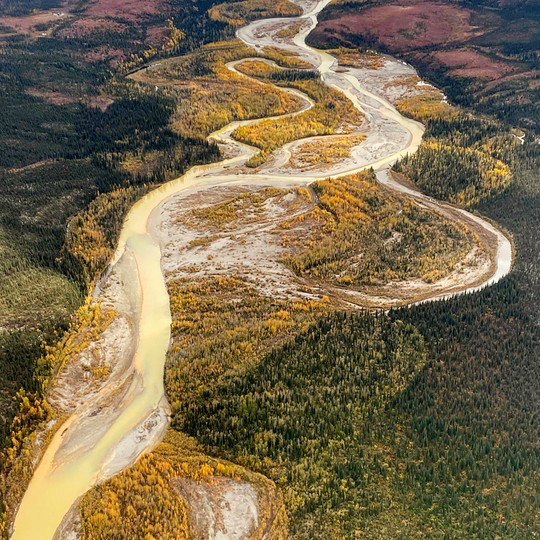
Roman Dial (professor) and graduate students from Alaska Pacific University observed orange- colored rivers and inadequate drinking water from previously pristine rivers in the Brooks Range (a mountain range within the Arctic Circle). Once pristine rivers that communities and wildlife rely on for drinking water are now full of acidic minerals. So what caused the decline in water quality of “America’s most pristine rivers”? Well, the existing theory is that climate change/global warming is melting deep layers of permafrost (a layer of soil that stays frozen all year). The melted permafrost is releasing sediments full of iron. When iron is exposed to moisture or oxygen, a chemical reaction called oxidation occurs. This reaction causes iron to rust and gives it a reddish-orange appearance. The oxidized minerals are draining into the rivers and causing the clear streams to become acidic and orange in appearance. However, some people, such as the members of the town Kivalina outside the Arctic circle, blame old mines such as the close-by Red Dog Mine.
Now what effect does this have on the lives of Alaskans? Well, the food small communities in Alaska rely on (trout, salmon, etc.) can be harmed or killed with the high acidity level. In addition, the rivers are these communities’ main source of drinking water. The toxic streams could certainly have a large impact on Alaskan communities. However, much more research and work has to be done to confirm a cause and work towards finding solutions– before it becomes too late for the isolated Alaskan towns.
Sources:
 Energy for the Environment
Leave a comment