I was recently visiting Barcelona, Spain on vacation and noticed several interesting things relating to Barcelona and its impact on & relationship with the environment. Through my experience staying in an Airbnb there, walking through the streets, and traveling within the city, I wrote down several things I could share with you all!
To begin, the drought in Catalunya. When I first got to the apartment that we were staying in, I saw signs by the sink and in the bathroom warning about the severe drought in this region of Spain. This drought was declared a state of emergency in February, due to below-average rainfall and the low level of the reservoirs. Residents of Barcelona and Catalunya are upset with tourists who are wasting water and not being mindful of the need for water preservation. The region is considering placing restrictions on tourists if the crisis continues. One positive piece of news– recent rainfall is allowing Catalonia to ease the restrictions. So if you do visit Barcelona or any place in Catalunya, make sure you are aware of that problem.
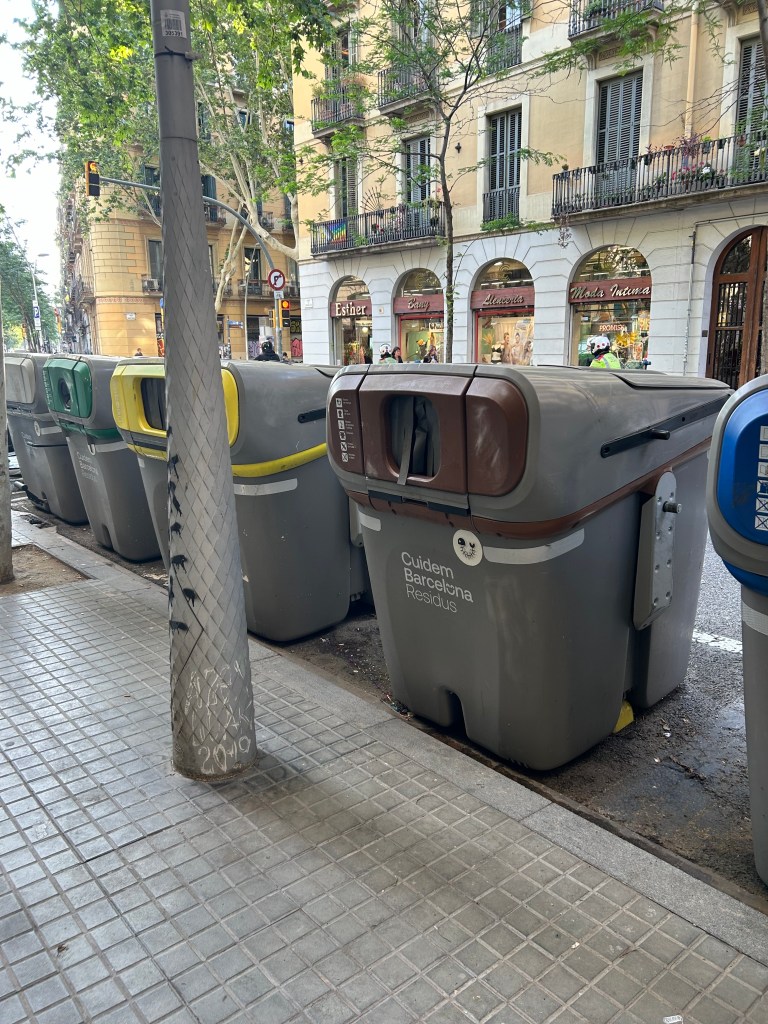
Next, as is custom across Europe, there are many different recycling bins. In the United States, we just have one recycling bin (at least, that’s what I have). In Barcelona and in the towns in Sardinia where I stayed during the second leg of our trip, there were at least 5 huge recycling bins located in many different streets. And not just in the streets– there were several small different recycling bins that you had to sort your waste into at the houses we stayed at. There were bins for organic waste (brown), cardboard/paper (blue), plastic (yellow), glass (green), and all other waste (grey). I took the photo, shown below, in Barcelona.
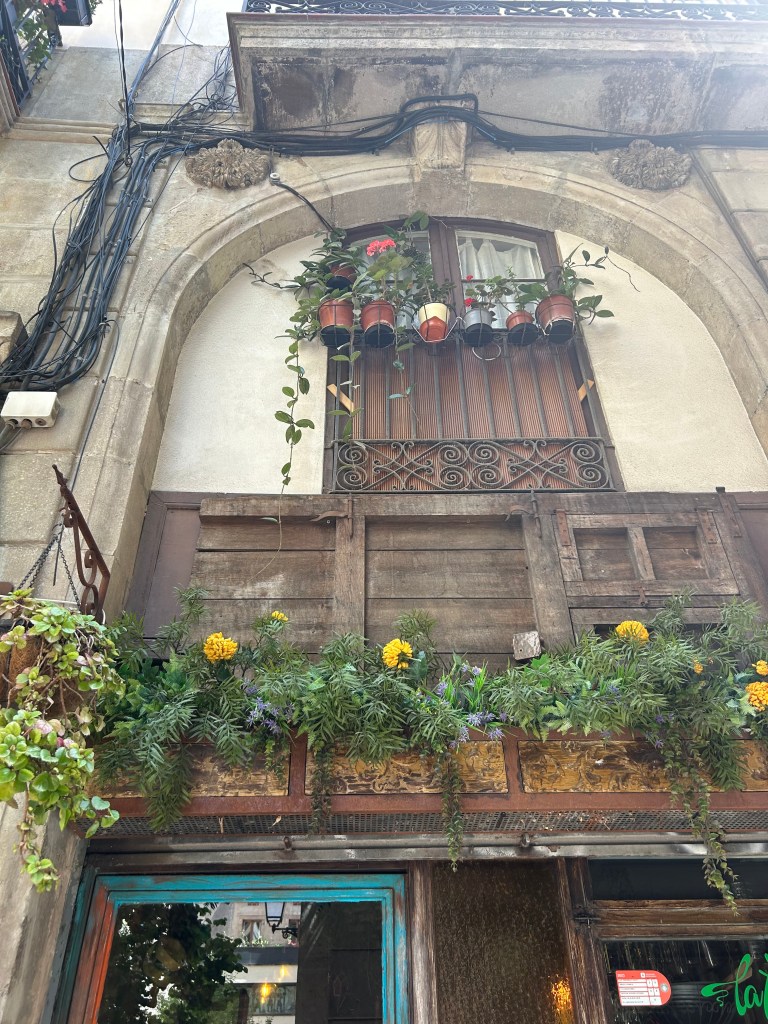
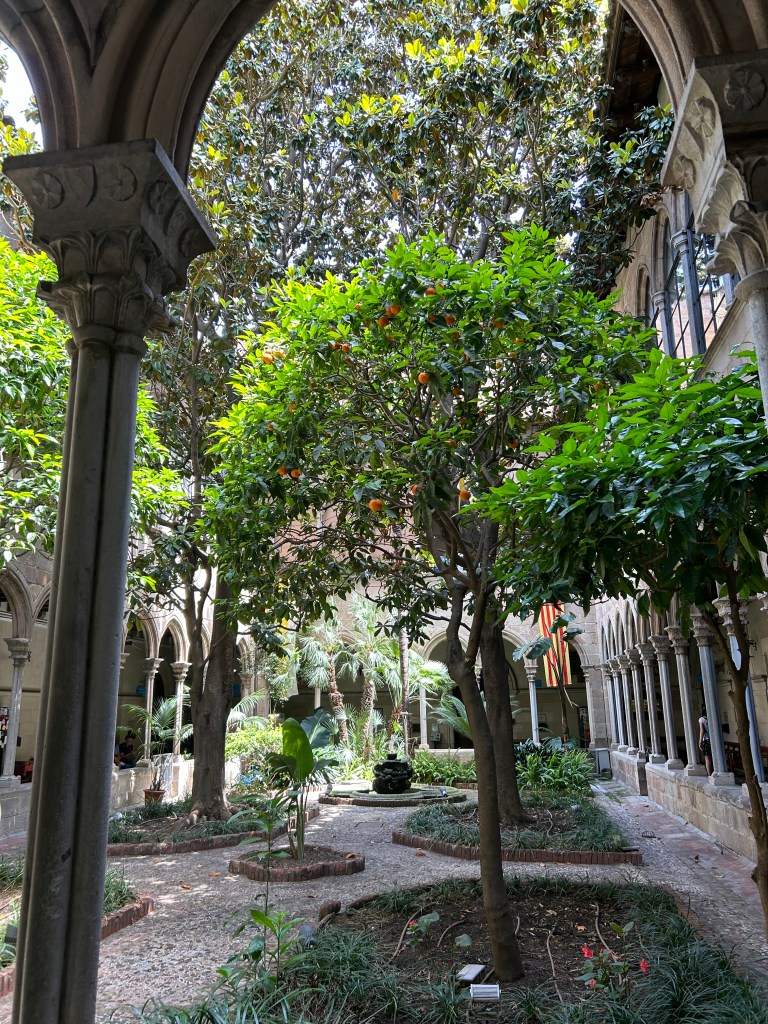
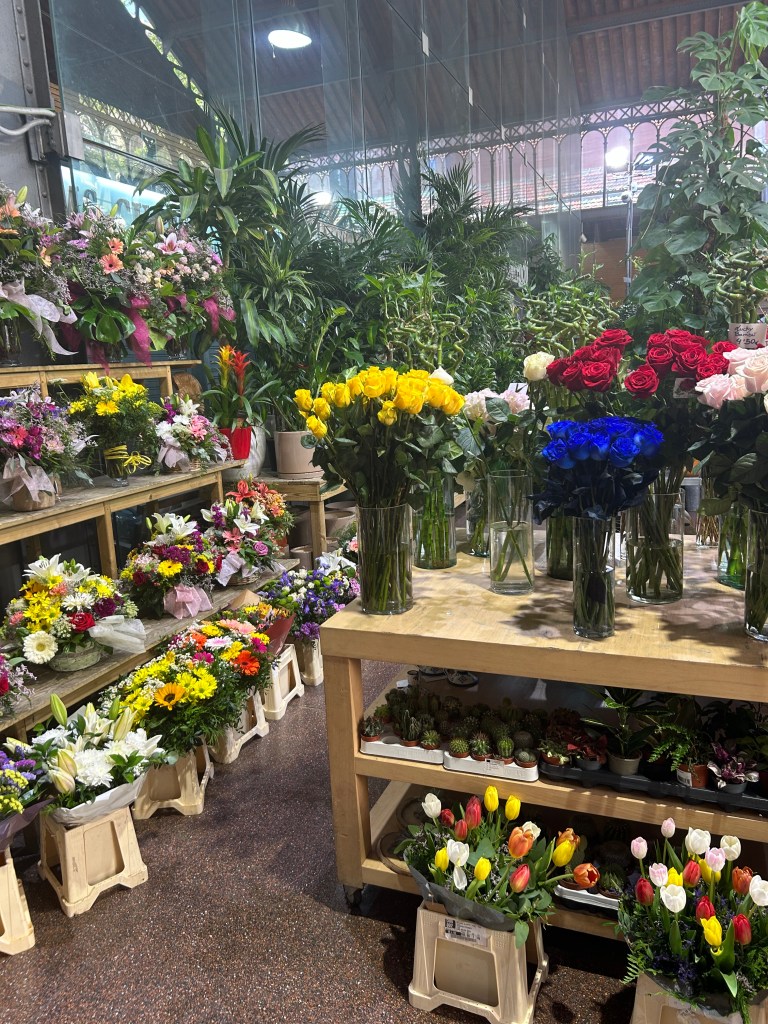
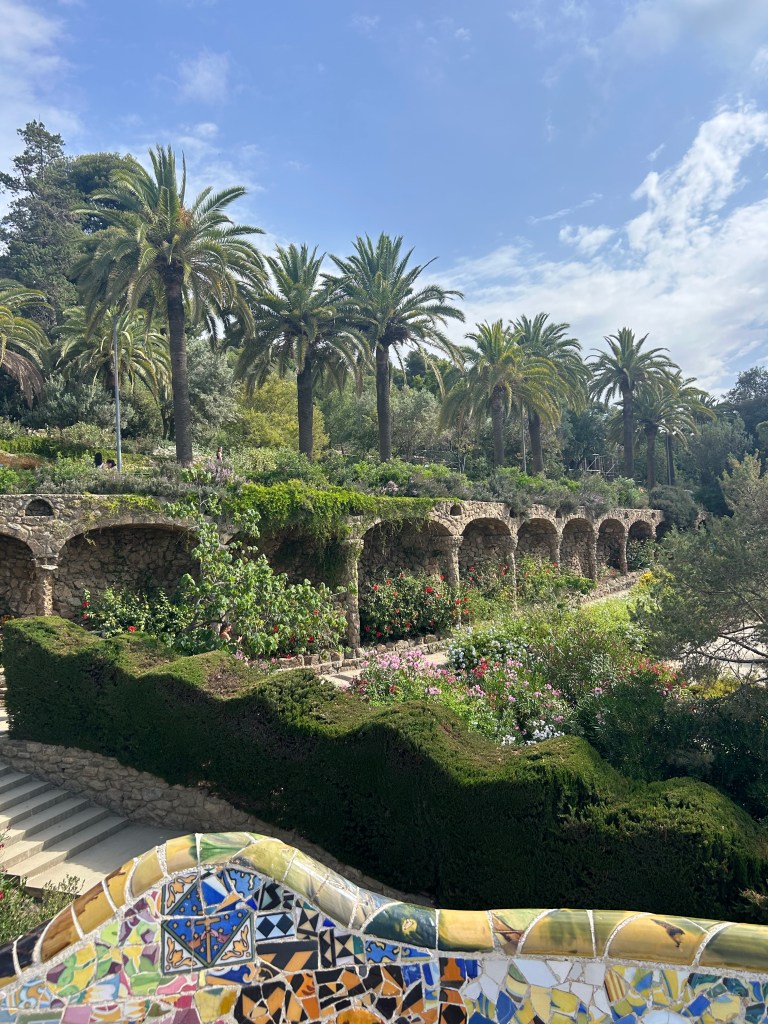
To continue, all the green spaces & parks were amazing. Throughout cities, even in America, there are often squares with green spaces or parks on some level. In Barcelona, this was also true and at an even higher level. We saw two huge parks, Park Guëll (the more famous one) and another peaceful park, Ciutadella Park, that reminded me of Central Park. Ambient areas like these that allow for residents & tourists to relax and explore nature are beautiful and much needed! In addition, the amount of plants, flower shops, and trees in Barcelona was surprising to me. Almost every balcony had flowers or potted plants and even in food markets, flower shops were abundant. There was much variation in the trees as well– I saw magnolia trees, orange trees, blue Jacaranda trees, and more. All this amounted to a healthy and alive atmosphere that would certainly help the environment, especially when considering light pollution & cooling down the city (the weather was excellent there…). The 4 photos are all photos I took in Barcelona!
Finally, the hybrid “Aerobús” Barcelona offers as airport transportation. We took these buses 4 times — to & from the Barcelona airport twice (we flew from Barcelona to Cagliari and then back for our flight home). The Aerobús system offers hybrid or completely electric buses. They are actually really nice and a great way to do airport transportation. However, these buses can get pricey if you are traveling with a big group; I believe they were around 12.50 euros/ticket. The photo is from the interior of the bus.

All in all, Barcelona was an amazing visit, with much history, great food, and fun experiences! I loved learning about the environmentally friendly things the city has put in place that allow everyone to have a great experience there. However, I would make sure to research water restrictions & the drought before you head there!
Thank you for reading. Check out my Instagram: @studentsagainstinvasivespecies and my alternate website studentsagainstinvasivespecies.org for more info 🙂
Sources:
 Energy for the Environment
Leave a comment