
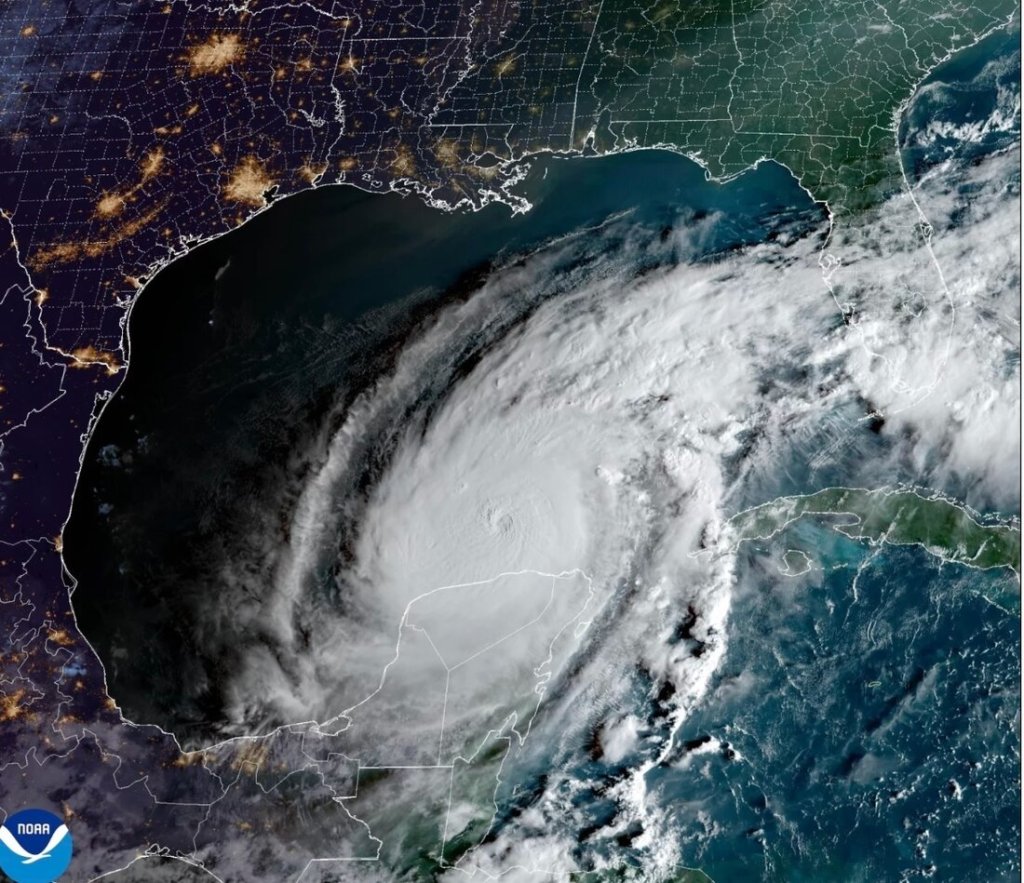
I am currently sitting in my house in South Florida writing this blog post, since Hurricane Milton has canceled school for the next three days. Even though I’ve lived in South Florida for over 11 years and the Floridian stereotype is to brush hurricanes off, Milton seems to be a nasty storm. All the talk about this hurricane got me thinking about how it could affect invasive species. I wasn’t sure if (similar to wildfires), the hurricane would cause the invasive species to bounce back even more prolifically, or if it would have an opposite, damaging effect. I tried to research and find out the answers to my questions below.
When I searched up ‘how do hurricanes impact invasive species?,’ the first article that came up was “how hurricanes increase the spread of invasive species”. All the articles beneath that one seemed to be in consensus- hurricanes are causing invasive species to spread.
But how are hurricanes doing this? According to the first source, Solitude Lake Management, hurricanes push invasive species further inland, promoting their spread and causing them to infringe upon new territories. One example that the article listed relates directly to my area– hurricanes are increasing the spread of Burmese pythons, one of South Florida’s most detrimental invaders.
If you’re from an area affected by hurricanes, then you know about the intense rain, storm surge, and constant “flood watch” notifications. The flooding caused by hurricanes can also generate the spread of invasives into novel territories. In my mind, I picture flowing water on the streets picking up seeds and carrying them downstream. If the seeds spread into new areas, invasive species, which are adapted to spread quickly and overtake native plants, can institute themselves in the ecosystem, causing the whole food chain to disrupt and continuing the problems (and the cost) they have caused in other areas.
Finally, before some examples, hurricanes especially disrupt aquatic environments and cause aquatic invasive species to pervade new waters. As they pick up water and steam, hurricanes can even cause invasive species to spread across oceans.
Here is one example of the effects a powerful hurricane can have on invasives.
Hurricane Andrew, a very destructive storm that hit parts of Florida, Louisiana, and the Bahamas, in 1992, caused the spread of many invasive species. First of all, Hurricane Andrew caused the captive red lionfish to be released into Florida’s oceans. Previously, the lionfish was in aquarium tanks, but the hurricane caused the tanks to be smashed, releasing the exotic fish into the ocean. While there were most likely other lionfish releases (whether accidental or not) before or after then, this one proved especially devastating, as not long after, lionfish began popping up all over Florida’s coral reefs. Next, scientists have studied how burmese pythons managed to be released into the wild. Hurricane Andrew is an easy explanation– just after the storm in 1992, Burmese pythons began to pop up in a certain area. That area had previously held a python breeding facility. The theory is that the hurricane damaged the facility and caused the pythons to be released.
To conclude, hurricanes do have a very serious and real impact on invasive species. Next time you hear about the aftermath of Hurricane Milton, also consider how the various aspects of a hurricane can worsen Florida’s invasive species problem. Stay safe everyone & thank you for reading!
Check out my Instagram below: @studentsagainstinvasivespecies
Website: https://studentsagainstinvasivespecies.org/
Sources:
How Hurricanes Are Increasing the Spread of Invasive Species In Our Communities
https://www.usgs.gov/news/featured-story/hurricanes-can-spread-invasive-species-if-they-survive-ride
 Energy for the Environment
Leave a comment